How Do You Know if a Horse Is Colicing
What is colic?
Colic indicates a painful problem in your equus caballus's abdomen. Because colic is oftentimes unpredictable and frequently unpreventable, it's a common concern for equus caballus owners. Horses are naturally prone to colic. Fortunately, over 80 percent of colic types reply well to treatment on the subcontract.
Signs of colic in your horse
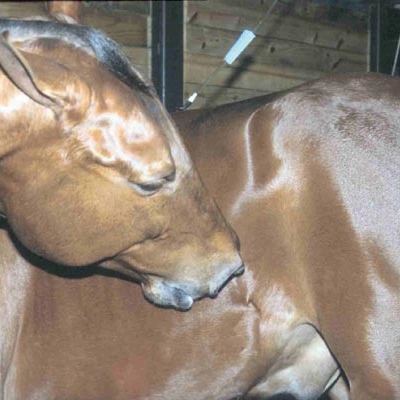
- Oft looking at their side.
- Biting or kicking their flank or belly.
- Lying downward and/or rolling.
- Little or no passing of manure.
- Fecal balls smaller than usual.
- Passing dry or mucus (slime)-covered manure.
- Poor eating behavior, may not eat all their grain or hay.
- Change in drinking behavior.
- Heart rate over 45 to 50 beats per minute.
- Tacky gums.
- Long capillary refill time.
- Off-colored mucous membranes.
Caring for the colicky equus caballus
Because colic is often unpredictable and oftentimes unpreventable, it'south a common concern for horse owners.
|
Each colic is unique. You lot should balance the factors involved in your horse's intendance, feeding and action. Work with your veterinarian and barn manager (if boarding) to determine the best plan for your horse. Revisit those plans annually to alter your practices due changes in activity, feeding, illness and other factors.
Horses are prone to colic and many types of colic aren't preventable. But you tin have some elementary steps to ensure your horse is at the lowest possible risk for colic.
Above all, exist a proactive owner. If your equus caballus is at unnecessary chance for colic, endeavor to alter the state of affairs. These measures should reduce colic chance, but don't guarantee to eliminate it.
Always have fresh, clean h2o
Enquiry shows horses without water for one to two hours had increased adventure of colic. This risk increased 10 times in horses over six years onetime. Horses adopt to drink out of buckets compared to automatic waterers. This preference is likely due to the ability to potable big amounts more chop-chop.
In the winter, always ensure automatic waterers and other water sources have free flowing water. Horses volition beverage more in colder conditions if the water is warm. Adding hot water to buckets, twice daily, works likewise as continuous warm water. Learn more than virtually watering horses in the winter.
When traveling on longer trips, stop to let the horses drink. A veterinarian tin likewise give them mineral oil earlier starting the trip.
Permit pasture turnout
Horses with access to ii to three unlike pastures in the previous month had lower colic risk than horses without pasture access. Inquiry shows feeding from round bales increases the risk of colic. This increase may relate to a subtract in round bale quality due to weather exposure and storage outside, the type of hay, and/or freely eating sure types of hay. More than information on pastures and hay.
Avert feeding hay on the ground in sandy areas
Horses may eat enough sand to bother their gut or bear on motility. To reduce the corporeality of sand eaten:
-
Utilize feed tubs or hay racks
-
Place condom mats or catch pans underneath racks so horses can eat scraps without sand
Feed grain and pelleted feeds only when you demand to
For every ane-pound increase in whole grain or corn fed, colic risk increases 70 per centum. Compared to horses fed 100 per centum hay:
-
Pelleted feeds led to a 6 to 9.five times increased colic chance
-
Sweetness feeds led to a 4 to 7.v times increased colic risk
More information on basic diet is available in ten things everyone should know near diet for the mature horse.
Sentinel horses carefully for colic following changes in do, stabling, or nutrition
Colic take chances increases within 2 weeks following changes. Farms making more than four feed changes in a twelvemonth have three times the incidence of colic than farms with less than iv feed changes. Even changing the batch of hay can increase the take chances of colic. Make only gradual changes in nutrition, housing and do whenever possible. To make changes in feed, mix i-quaternary new with iii-fourths old for virtually seven days, then increase the per centum of new feed gradually.
Float your horse's teeth every six months
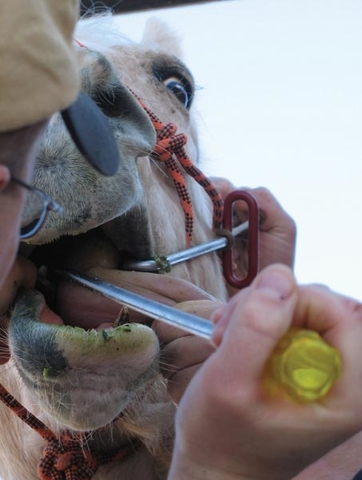
Routine floating ensures your equus caballus chews its feedstuff properly and thoroughly. Floating is filing down the sharp enamel points on the buccal and lingual. The buccal is the cheek surface of the upper teeth. The lingual is the tongue surface of the lower teeth. Learn more than about caring for your horse'southward teeth.
Control parasites
Horses on a daily or regular worming program are less likely to colic. Larn more about equus caballus deworming and parasites.
Closely monitor and care for your horse as much equally possible yourself
Horses are two to iii times less likely to colic when receiving care from their possessor compared to a stable manager or trainer. Yous will pick up on subtle signs or changes in habit more apace if you lot're familiar with your horse's "normal." Larn more about how to know what's normal for your equus caballus.
Watch broodmares and horses that take colicked earlier
You should closely lookout man broodmares in the two months following foaling. Also watch horses that have been ill or take colicked before. These horses take a higher risk of colic, and early treatment is important.
Talk over your utilize of bute with a veterinarian
Treating with bute (phenylbutazone) tin can brand horses prone to some types of colic and tin can hibernate early signs of colic. Hash out the right levels of bute with your veterinary and avoid using large amounts or long-term employ.
Impaction colic
Impactions occur when feed material builds up in a part of the gut (usually the colon) and the equus caballus can't easily remove it. Pain occurs equally the gut wall stretches and strongly contracts trying to push the feed through the colon.
Causes of impaction include the following;
- Fibroid feed (poorly chewed)
- Dry feed; poor water intake; dehydration
- Poor motility
- A cake in the digestive tract
Because of the folds and turns of the colon, there are several narrow sites prone to impactions. Horses with impactions are often mildly painful and off feed. They may non go much worse for several days.
Gas colic
Gas colic may occur when the microbes in the colon produce excessive gas, perchance due to dietary changes or highly fermented feeds. The gas stretches the gut wall causing mild to moderate pain. Most gas colics clear up with little handling. But gas colics may cause the colon to move out of its normal place.
Colon shift
The horse's long colon sometimes moves out of position. It may flip forrad, hook over the kidney, or even twist like a phone cord. This shift frequently leads to impactions and gas build upwards and cause more severe or prolonged hurting. A tight colon twist tin can damage or impale the colon past stopping blood flow and oxygen availability. Large colon twists crusade severe hurting and illness as toxins enter the gut wall. This blazon of colic requires emergency surgery.
Poor blood supply to the gut
Older horses may become fatty tumors that can wrap around the small intestine and reduce claret flow. Parasites may motion through the blood vessels and cause straight damage to the vessels and indirect impairment to the gut.
Poor motility
Colic may occur due to poor motility. In nearly cases, the cause of poor motility isn't clear. Poor move may relate to infections in the gut or in the abdominal crenel. These horses frequently become sick due to toxins coming from the gut.
How does poor move cause problems?
If the process responsible for moving feed in the gut becomes disrupted, food may stop moving fifty-fifty if the path is articulate. The gut will add fluid to the small intestine to try to move the food along. But this fluid can't motility either. If the gut continues to add together fluid, the horse may become dehydrated and shocky.
Overtime, fluid will back up into the tummy. Since horses can't throw upwards, the fluid stretches the tummy and causes pain. Without relief, the stomach may burst. If poor movement occurs in the colon, gas will build up and lead to gas colic and maybe displacement.
Walking can provide pain relief and encourage motility if your horse has cramps or is early on in colic. Walking tin can also assistance prevent your horse from rolling.
Rolling can hurt you or your equus caballus. If your equus caballus wants to curlicue oftentimes, information technology's better to exist in an open surface area. A equus caballus may become cast rolling in a stall or other small area.
If your horse is uncontrollably thrashing, stay out of the way. It'due south unclear whether walking a equus caballus during colic reduces the severity of colic.
Some types of colic are linked to fever. Horses with a fever are okay to walk while waiting for the veterinarian.
Diseases such as pleuritis, tying up and laminitis may nowadays signs similar to colic. Walking horses with these diseases will but make the affliction worse.
- Pleuritis is swelling of the breast cavity, which y'all tin can feel by pressing the ribs.
- Tying upwards is when the muscles look bloated or feel firm due to muscle trauma.
- Laminitis or founder causes heat and hurting in the foot.
In general, walk the equus caballus if information technology makes them feel better. Stop walking if the horse seems worse or if you detect signs of rib hurting, foot pain, or muscle pain. Never walk your horse or yourself to exhaustion.
When to call the veterinarian
Mild, recently onset colic may improve by walking the equus caballus, without a veterinarian. You should call a veterinarian if:
-
You haven't observed the horse in several hours and y'all notice signs of colic
-
You don't know the length of fourth dimension the horse has been showing signs of colic
-
The colic is severe and doesn't improve with walking
-
The horse'due south vital signs are not normal, yous tin review normal vitals for horses in "Bones outset aid for your horse."
Treating colic with the assistance of a veterinarian
While waiting for your veterinary
-
Remove your equus caballus'due south feed to forestall further problems.
-
If possible, take your horse'south vitals and share this information with your veterinary. Your veterinary may exist able to determine how severe the colic is before arriving.
-
If rubber, walk your horse to help motion and prevent rolling. Only walk if it makes your horse feel meliorate, and never walk until yous or your horse tire.
Colic exams
Routine physical exam
When your veterinarian arrives she/he volition try to determine the severity and full general type of colic. Information technology'southward uncommon to pinpoint the exact cause of colic. Just your veterinarian may determine if it'due south more than probable to be an impaction or gas colic, or if information technology may involve damaged gut or toxemia.
Your veterinarian will assess your horse'southward heart condition and identify signs of daze or toxemia. If your horse is too uncomfortable, your veterinarian may requite a short acting analgesic/tranquilizer to command the horse'south pain.
Nasogastric tube
Depending on your case, your veterinary may and so laissez passer a nasogastric tube. This narrow, long tube runs from the nostrils to the tum. Your veterinary uses a nasogastric tube to make certain fluid hasn't congenital-up in the tummy. This process can be a life-saving measure past preventing the breadbasket from bursting.
If in that location'south minimal fluid, your veterinarian can use the tube to give mineral oil, water, and/or other laxatives. Mineral oil and laxatives may salvage an impaction, and water can rehydrate your horse. Both mineral oil and water can stimulate gut motility.
Rectal exam
A rectal exam allows your veterinarian to palpate the back half of the gut. Sometimes your veterinarian can feel an impaction. A rectal exam is always somewhat risky due to the potential of vehement the rectum. If the rectum tears, feces can enter the abdominal cavity and crusade severe problems. A veterinarian should use a sedative or twitch for this exam. Not every colic example needs a rectal examination.
Belly tap
If your veterinary is concerned about infection or damage in the gut, she/he may stick a needle in the gut and try to collect fluid for testing. The examination results can help make up one's mind if the horse needs surgery. But a belly tap generally only occurs if there's a problem getting the horse to a referral establishment or if the colic persists.
Other exams
If you take your horse to an equine hospital, a veterinary may run blood work or perform tests such equally ultrasound or radiographs.
Follow-up treatment
Your veterinary will likely recommend that you don't feed your equus caballus grain or hay until they pass manure and the colic resolves. Feed may add together to an impaction. Grazing on a minor amount of fresh grass may help stimulate motility. Your veterinarian may also have you walk your horse periodically to encourage motility.
Nigh cases will respond to this type of treatment within a few hours. Some horses may demand additional fluids for rehydration or may need another exam. Your veterinary may recommend a visit to a horse hospital equipped for abdominal surgery if the colic:
- Is more severe
- Requires intensive handling
- Doesn't resolve with on-farm handling
Visiting the hospital for colic
Veterinarians may repeat several tests to appraise how your horse is responding to your veterinarian'due south treatment. Veterinarians volition then decide if your equus caballus needs surgery or continued treatment and close monitoring. Success rates after colic surgery differ with the type of gut involvement. In full general, horses take improve than a 75 percent long-term survival rate after colic surgery with early diagnosis and proper treatment.
Much to everyone's regret, sometimes the colic is and so severe or the prognosis is so poor that a decision may exist to euthanize the horse. Postmortem exams can be helpful in determining the cause of colic. These results can aid forbid similar cases if the cause relates to the creature's care.
Most colic episodes will fully resolve with no long-lasting problems. But, your horse may be at risk for other problems if:
- Toxins enter the intestinal crenel or bloodstream
- Your horse needs colic surgery
Toxin-caused bug
Sure bacteria behave toxins. Many of these leaner are commonly establish in the gut. Large amounts of toxins can overwhelm your horse'southward normal defense. Toxins may also leak out if your equus caballus's gut is damaged. Both of these cases tin cause your horse to become ill. Signs your equus caballus may be ill include:
- Stupor (poor blood flow causing an elevated centre rate and absurd limbs)
- Reddened or purplish gums
- Red lines around the teeth
- Depression
Toxins can cause laminitis, clotting issues, and damage to other organs (east.g. kidneys). The equus caballus's immune system may weaken when the horse undergoes stress (east.g. from colic surgery). A weakened immune system tin't keep natural organisms such as Salmonella under control. Thus, the horse develops diarrhea. This can be a severe problem of colic that is difficult and expensive to treat. Many horses have diarrhea following intestinal upset and should be monitored for salmonella.
Mail service-surgery issues
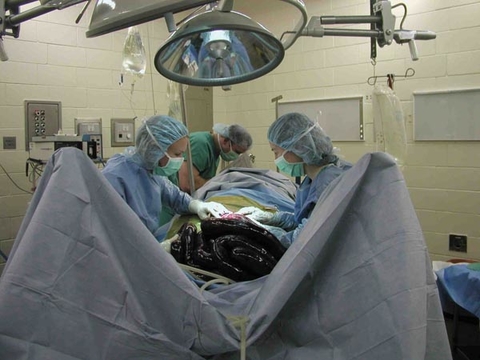
Subsequently colic surgery, your horse will exist watched for motility upset and infections of the incision site and intestinal cavity. Move problems occurring after small intestinal surgery may greatly prolong nursing care and hospital stays.
Surgery also places horses at risk for developing intestinal adhesions. Adhesions may brand the intestines stick to each other or the trunk wall in abnormal positions. Some adhesions can cause repeated fits of colic. In general, surgery for large colon problems has a greater success rate than surgery for small intestinal bug. Luckily the odds for both are improving all the time.
Horses accept an intestinal tract adapted to digest forages. The first office of the gut is similar to humans: nutrient travels down the esophagus, mixes with stomach acid, and starts digestion and absorption the small intestine.
The remainder of the gut is long and specialized to process the cellulose in hays.
The cecum (resembles the appendix in people) and colon (large intestine) are large and take up about of the space in the abdomen. Considering of its length, the colon folds on itself and loops around, somewhat like a folded extension cord or ribbon. The extra length gives the horse more time to remove nutrients from the hay. The colon is non well attached to the belly, which tin allow it to get displaced.
These portions of the gut also comprise microorganisms that help digest hay.
Reviewed in 2021
whitakerbeyea1975.blogspot.com
Source: https://extension.umn.edu/horse-health/colic-your-horse

Postar um comentário for "How Do You Know if a Horse Is Colicing"